Like any new landscape, California friendly plants require careful attention during their initial establishment period. During the “establishment period” the root system should become expansive – in other words, care about how well the plant looks above ground, but care more about how well it is doing underground. Once its root system becomes well established (hence, “establishment period”), the new plants should thrive.
The more effort put into maintaining the landscape in its early stages, the less maintenance is necessary in the long run. There is no longer a need for mowing, edging, or spending countless hours maintaining a water-thirsty grass lawn. However, there are a few things to consider when maintaining a new garden. For example, it will be important to occasionally check the irrigation system and ensure that it is running efficiently without any leaks.
This section will provide tips and instructions to help maintain a new climate friendly landscape. Included with helpful watering tips, pruning instructions, and helpful recommendations for how to prevent pests and weeds.
To help the plants get established, water like Mother Nature! Water deeply and infrequently. Soil should become moderately dry to the touch at 4" inches deep in between watering days so the roots are not prone to rot.
General Watering Schedule for California native plants:
- First month after plant installation: Water 1x week
- Second & third month: Water every other week
- Fourth month: Water once a month
- Six months or more: The plants should be reaching establishment. Wait longer between waterings and allow for the natural rain cycle water for the landscape
Things to Look for when watering:
Be sure to check up on the new plants and make sure they aren’t drooping or turning yellow. Overwatering and underwatering can show similar signs. Try digging a few inches down into the root zone of the plant to check the moisture of the soil and adjust the watering accordingly.
Remember that native plants are adapted to winter rainfall and summer dry periods. If summer watering is really needed, water only once a month with a deep soak on a cool day. A deep soak is accomplished by saturating the soil at least one foot around the base of each plant.
Native plants require minimal pruning if the garden is designed well and plants are spaced appropriately. However, thinning and cutting back certain types of plants will help direct growth of the maturing plant. If necessary, most trees and shrubs may be pruned right after flowering. Some plants might require pruning during certain times of the year while others may need to be cut back or dead-headed.
Pruning vs. Cutting Back vs. Dead-heading

Pruning
Pruning is the trimming or cutting of branches or other plant parts that results in reduction in overall size. Overall, pruning is to improve appearance, rejuvenate growth, improve plant health and accentuate natural growth patterns. It is not necessary to prune all plants. Some people like the appearance of a well-maintained, pruned garden, while others like a more natural look. It is important that the cut should be done close to the branch to avoid creating stubs. Ask a local nursery if any of the plants require pruning and; if so, what time of year they should be pruned and by how much.
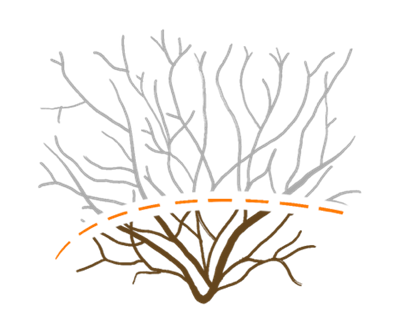
Cutting back
Cutting a woody plant to 6 inches or less in height with the intention to encourage production of new shoots.

Dead-heading
The process of removing dead flowers and flower clusters before seeds have been produced. Dead-heading allows for a longer blooming season and improves the plant appearance. This should only be done if the plant is an annual or non-woody perennial.
Remove no more than 10 – 25 percent of live foliage at a time. Pruning young trees can establish good structure later, but try to preserve the fruits for decoration — and for wildlife.
Healthy native plants have fewer pests than traditional landscaping plants.Learning to recognize good pests from bad pests will help choose the best pest control method. Remember that a munched leaf is not necessarily a bad thing. It could mean the local insects are feeding on whatthey need to survive.
If any weeds are present in the landscape, it is best to address it right away. Neglecting to remove weeds at first sight can quickly result in an unnoticed takeover of the garden and lead to more maintenance in the future.
To learn how to recognize good pests from bad pests, practice integrated pest management to help you choose the best pest control method, and learn how to support beneficial insects in your garden, visit CNPS.org.